
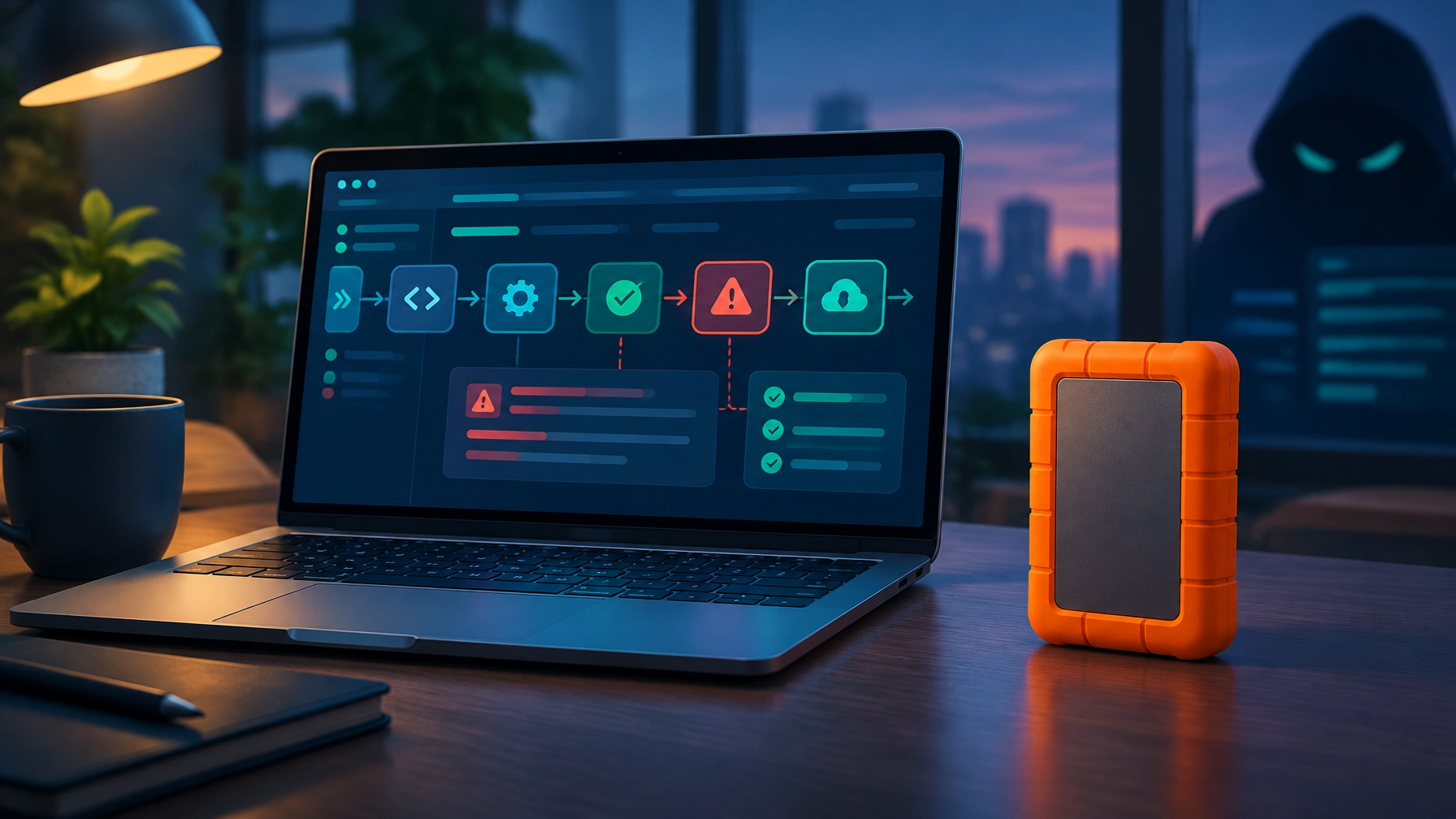
Welcome to Sunday’s tech roundup, where a serious security alert meets a very practical desk upgrade. Today’s theme: lock the digital service door, then make sure important files have somewhere safe to land.
Security Brief
GitLab has patched CVE-2026-97229, a maximum-severity vulnerability with a CVSS score of 10.0. The flaw is in the CI/CD Regular Expression Compiler, which handles regular expressions in pipeline configuration files. In plain English, a weakness in how that component processes and validates a specially crafted expression could let a remote attacker run code on an affected GitLab server. The troubling detail for small businesses: the attacker does not need an account.
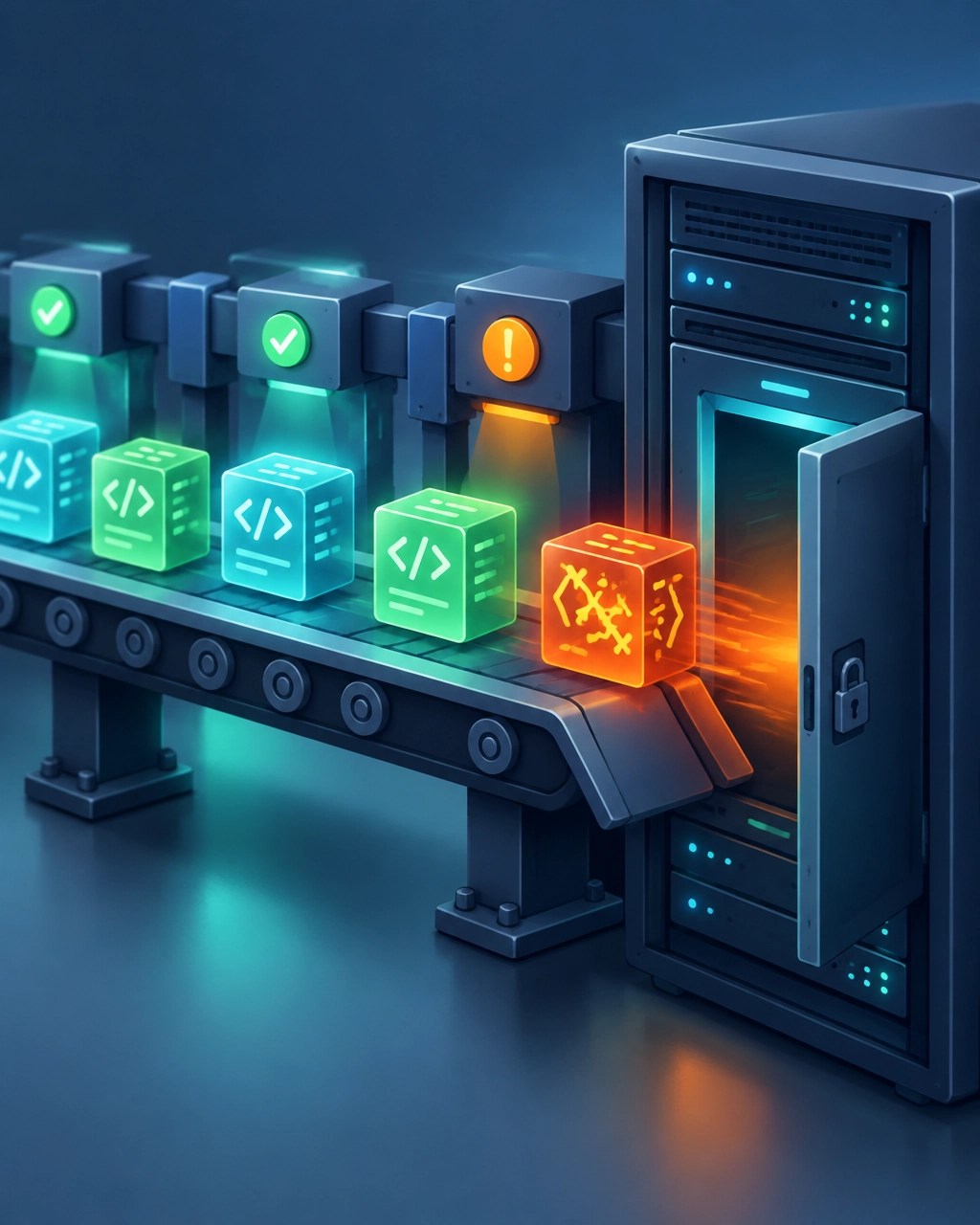
Think of a CI/CD pipeline as the service door behind an online store. Deliveries come in, code goes out, and the back entrance may not get the same attention as the storefront. If a self-managed GitLab server is exposed to the internet and remains unpatched, this flaw can turn that overlooked entrance into a serious risk for code, systems, and the work that keeps a business running.
GitLab fixed the issue in Community Edition and Enterprise Edition versions 19.4.2, 19.3.5, and 19.2.8. The vulnerability was reported through HackerOne by a security researcher using the handle “joaxcar.” GitLab has also released threat detections for self-managed instances after detecting exploitation attempts. CISA confirmed active exploitation and added the flaw to its Known Exploited Vulnerabilities Catalog on October 29. Its federal deadline falls on Sunday under Binding Operational Directive 26-04, and CISA is encouraging private-sector security teams to prioritize patching too.
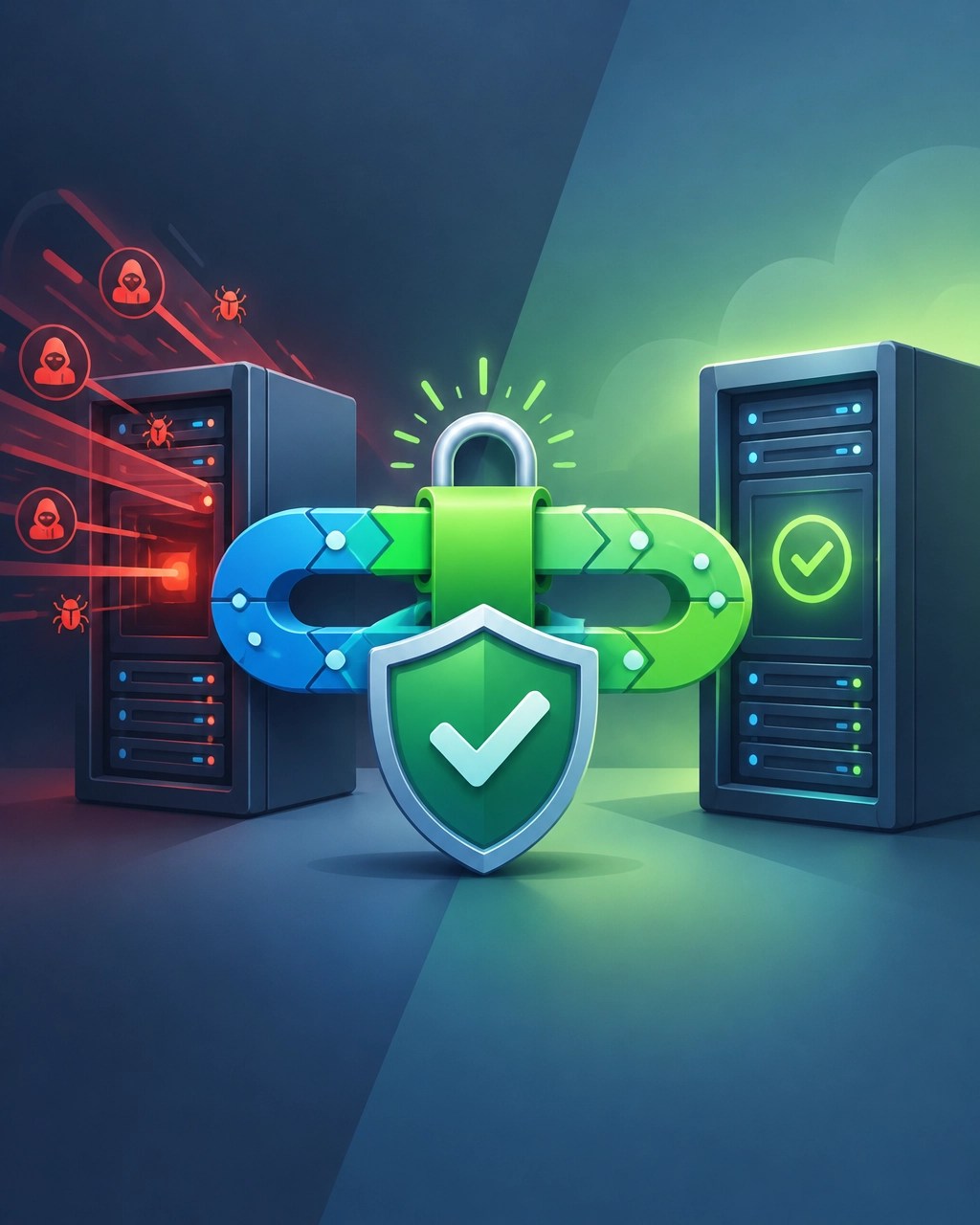
For a small business, the action list is clear: if GitLab is self-managed, upgrade to the fixed version for the current release branch, review GitLab’s threat detections for signs of exploitation, and keep internet-facing development servers behind a VPN or firewall allowlist where possible. Pair code backups with verified offline backups of the data and systems the pipeline touches. Managed GitLab.com instances are updated by GitLab, so the main concern here is self-managed servers.
Shadowserver tracks nearly 2,800 internet-exposed GitLab Community Edition instances, a reminder that exposed development infrastructure is not a theoretical edge case. This is also GitLab’s third maximum-severity flaw in recent weeks, following CVE-2026-110264, another Regular Expression Compiler remote code execution issue, and CVE-2026-85706, a path traversal flaw that could expose credentials and secrets. CISA has listed six GitLab vulnerabilities as exploited in the wild since November 2021. The platform’s broad use, including at more than half of Fortune 100 companies, makes timely patching a worthwhile priority for organizations of every size.
Desk Upgrade
Today’s desk upgrade is the LaCie Rugged USB-C 5TB Portable External Hard Drive, model STFR5000800. The price in Mereja.Tech’s October 31 deals roundup was $209.08, down from a listed $309.77, or 33% off. It was rated 4.5 stars from 5,242 Amazon reviews, and the listing showed Amazon.com as the seller. Deal prices can change, so check the listing before buying.

This is a compact, bus-powered 2.5-inch mechanical hard drive with 5TB of storage, a USB-C connection, and LaCie’s signature orange rubber bumper. It works with Mac and PC, and draws power through its USB-C cable, so there is no wall adapter to keep track of. The published durability ratings include drops from about four feet, IP52 dust and rain resistance, and crush resistance up to one ton.
The appeal is straightforward: lots of portable capacity, a protective enclosure, and a useful role in a backup kit. It is well suited to keeping a second copy of video projects, business files, or archives. Pairing it with the security story makes sense: patching helps protect the perimeter, while a disconnected backup can provide another recovery option if something gets through.

Honest caveats belong in the review, too. This is a spinning mechanical drive, not a portable SSD, so transfers are much slower and the drive can be noisy during use. It is better suited to backups and archives than as a snappy everyday scratch disk. Owner reports about long-term reliability are mixed, which is exactly why this should be one copy in a backup plan, not the only copy. IP52 means dust protection and resistance to splashes or light rain, not water immersion, and the orange bumper is not a force field.
A practical backup habit is the 3-2-1 approach: keep three copies, use two types of media, and store one copy off-site. This drive can fill one role in that plan, but it cannot replace the rest of it.
Daily Links
Security Brief
- BleepingComputer: CISA says max-severity GitLab flaw is being exploited
- CISA: Known Exploited Vulnerabilities Catalog update
- GitLab: Critical patch release 19.4.2, 19.3.5, and 19.2.8
- The Hacker News: CISA adds actively exploited GitLab RCE
Desk Upgrade
Grow with Network Repair1
A big thank-you to the community: Network Repair1 has reached 13,000 YouTube subscribers and more than 1.1 million lifetime views. That support helps us keep creating practical tech coverage, product reviews, and helpful tutorials. Explore more on the Network Repair1 video page.
Promote with Network Repair1
- 🎥 Shopify and Amazon sellers: We create product videos that can showcase the features customers need to see.
- 🛠️ Remote IT support: We help individuals and small businesses troubleshoot, secure, and optimize their technology.
- 🤝 Brand partnerships: Let's collaborate on useful content and grow together. We’re ready to discuss a project.
Ready to upgrade your tech? Check out our curated list of essential tools to keep you connected and productive.
The items mentioned are featured on the YouTube channel.
https://www.amazon.com/shop/networkrepair1?ref_=cm_sw_r_cp_ud_aipsfshop_XV0ER95A5EVVJDPA7W6A_1
805-723-9608
Leave a Reply